SFDA Approves Registration of New Treatment for Advanced or Metastatic Breast Cancer with a Gene Mutation
2026-05-15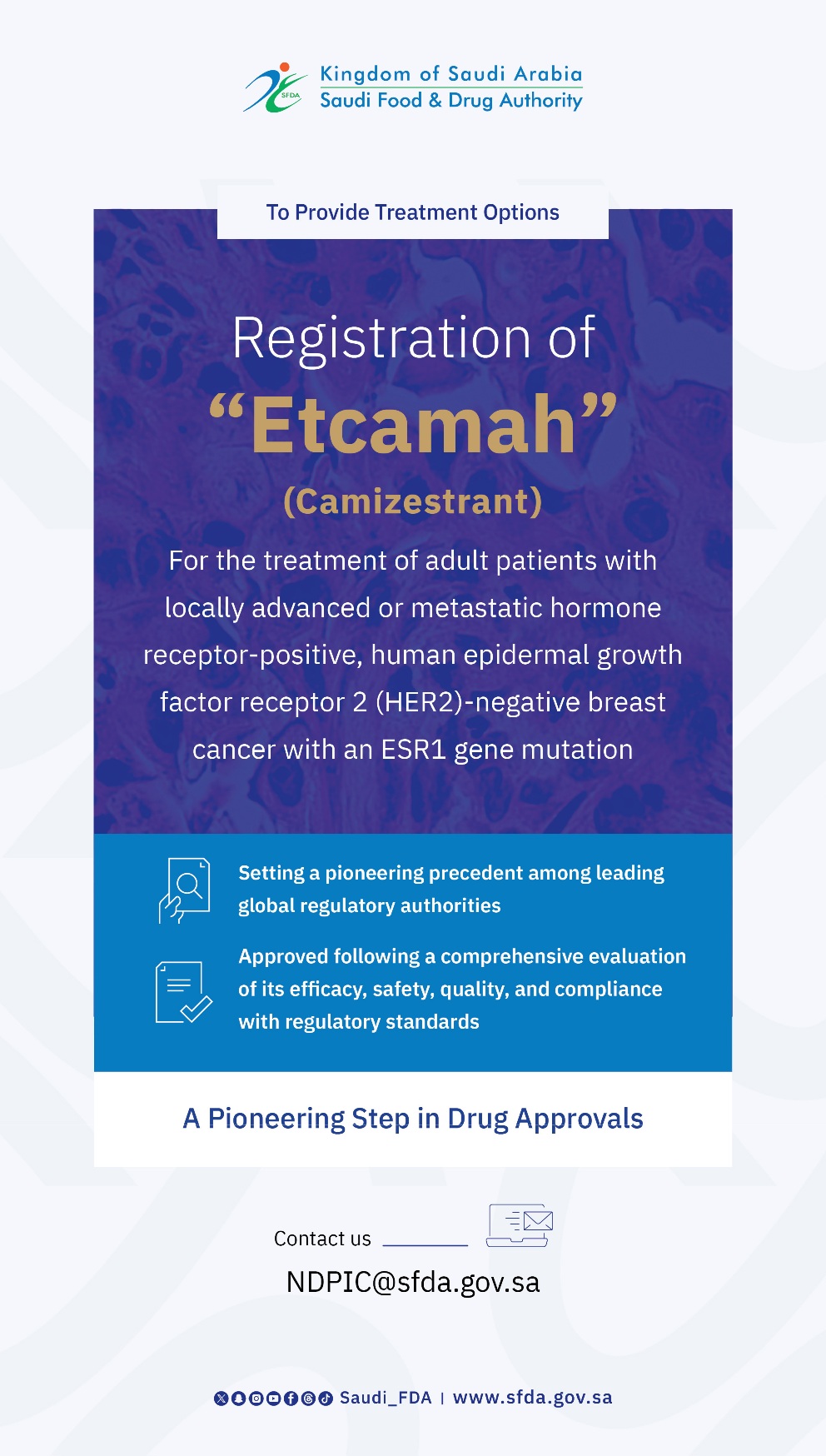
The Saudi Food and Drug Authority (SFDA) has approved the registration of Etcamah (camizestrant) for the treatment of adult patients with locally advanced or metastatic hormone receptor-positive, human epidermal growth factor receptor 2 (HER2)-negative breast cancer with an ESR1 gene mutation that emerges during first-line hormonal therapy, in combination with CDK4/6 inhibitors.
This approval sets a pioneering precedent for the SFDA among leading global regulatory authorities, reflecting the its commitment to accelerating patient access to innovative therapeutic options through the Breakthrough Medicine Program.
Innovative Mechanism of Action
Etcamah (camizestrant) is an oral selective estrogen receptor degrader (SERD) and a complete estrogen receptor antagonist. It acts by binding to and degrading estrogen receptors in breast cancer cells, in both their wild-type and mutant forms, which are proteins that drive the growth and proliferation of cancer cells. Targeting these receptors therefore contributes to limiting tumor growth and spread.
A Comprehensive Evaluation Preceded the Approval Decision
The SFDA stated that the decision to approve the registration of the product was made following a comprehensive evaluation of its efficacy, safety, and quality, based on the totality of evidence and data submitted to the Authority. The primary endpoints demonstrated a statistically significant 56% reduction in the risk of disease progression or death compared with continuing standard hormonal therapy. Also, the median progression-free survival was approximately 16 months for patients receiving Etcamah, compared with approximately 9 months for patients on standard therapy, specifically in patients who developed an ESR1 gene mutation during first-line hormonal therapy, when used in combination with a CDK4/6 inhibitor.
Additionally, the secondary endpoint of time to second disease progression or death supported the therapeutic benefit of the product, showing an additional 37% reduction in the risk of second progression or death. Patient-reported outcome measures also showed improvements in quality of life and delays in the deterioration of overall health status and disease-related symptoms.
Most Common Side Effects
Clinical studies indicated that the most common side effects included visual effects, such as flashes of light, brief persistence of an image after the visual stimulus has disappeared, and other mild visual effects, in addition to slow heart rate in some patients.
A New Step Toward Enhancing the Quality of Healthcare
This approval reflects the SFDA's commitment to support pharmaceutical innovation and to enable patients to access modern therapeutic options, through the Breakthrough Medicine Program. These efforts are central to enhancing healthcare quality and increasing the efficiency of treatment services, directly aligning with the objectives of the Health Sector Transformation Program under the Saudi Vision 2030.