
SFDA Approves the Registration of “Pemazyre” for the Treatment of Bile Duct Cancer in Adults
2025-11-10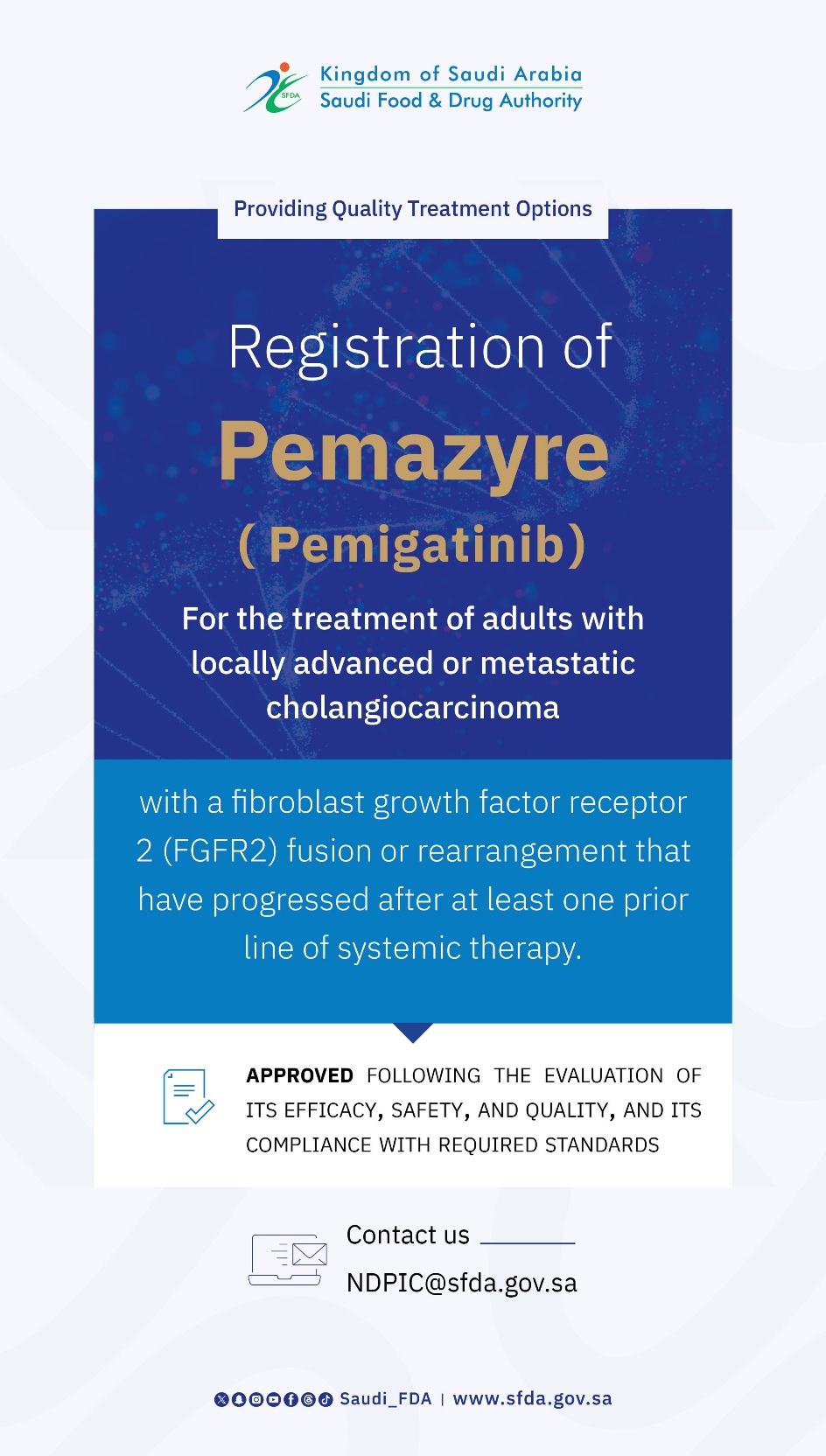
The Saudi Food and Drug Authority (SFDA) has approved the registration of Pemazyre (Pemigatinib) as a monotherapy for adults with locally advanced or metastatic cholangiocarcinoma with a fibroblast growth factor receptor 2 (FGFR2) fusion or rearrangement, who have progressed after at least one prior line of systemic therapy.
Inhibition of Signals that Stimulate Cancer Cell Growth
Pemazyre works by inhibiting the fibroblast growth factor receptor 2 (FGFR2) located on the surface of certain cancer cells. This receptor plays a key role in stimulating tumor growth. By targeting this receptor, the drug blocks the signaling pathways that promote cancer cell growth and division, ultimately slowing down tumor progression and spread.
Positive Results Demonstrated in Clinical Studies
The SFDA indicated that the registration of Pemazyre came after a comprehensive evaluation of the totality of evidence regarding its efficacy, safety, and quality, in accordance with the approved regulatory requirements. The results of the clinical study showed that the Objective Response Rate (ORR) was 37%, including a complete response in 2.8% of patients and a partial response in 34.3%. Meanwhile, the median duration of response was approximately 9.1 months.
Based on these results, SFDA considered that Pemazyre provides a valuable treatment option for a group of patients with limited therapeutic choices after the failure of previous treatments, contributing to improving disease control and prolonging survival.
The SFDA also clarified that the registration was carried out according to the principle of accelerated approval, relying on the response rate and duration of response as surrogate indicators of long-term clinical benefit, with the requirement to complete confirmatory studies to establish the long-term clinical benefit.
Most Common Adverse Events
Clinical studies indicated that the most common side effects included hyperphosphataemia , alopecia, diarrhea, dry mouth, fatigue, and taste disturbances. It may also cause some changes in the eyes, so regular monitoring during the treatment period is recommended to ensure safety.
A New Registration that Contributes to Enhancing the Quality of Healthcare
This registration comes as a continuation of the Authority's ongoing efforts to enhance innovation in the healthcare sector and increase treatment options for patients, contributing to the improvement of quality of life and the sustainability of the healthcare system, in line with the objectives of the Health Sector Transformation Program, one of the programs of Saudi Arabia's Vision 2030.