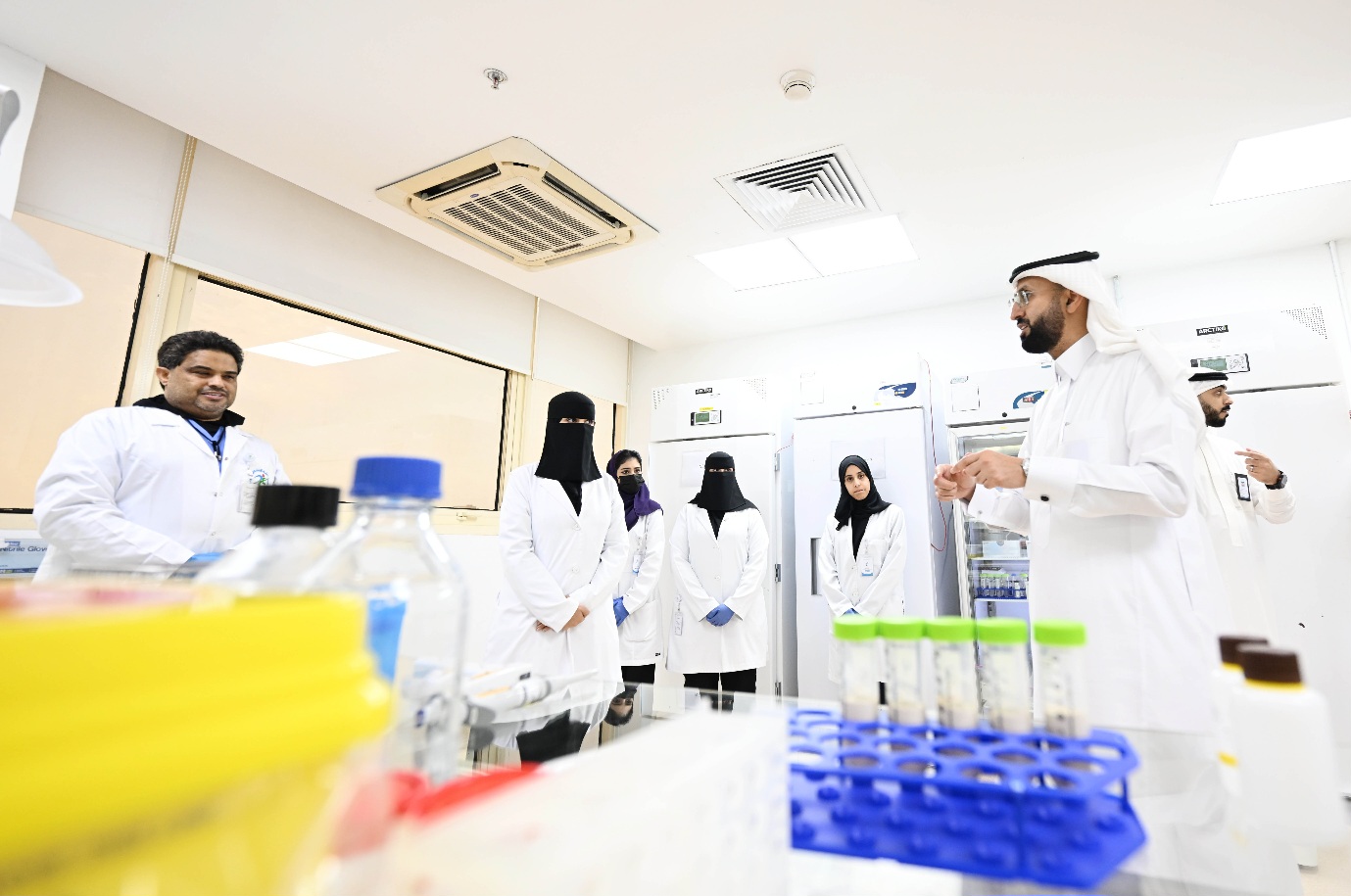
H.E. Dr. Hisham S. Aljadhey, CEO of the Saudi Food and Drug Authority (SFDA), met at the Authority’s headquarters in Riyadh with several chief executives and representatives of local and international pharmaceutical companies to discuss key issues and opportunities that will contribute to the growth and support of the pharmaceutical sector in the Kingdom.
The Saudi Food and Drug Authority (SFDA), has approved the registration of Qalsody (tofersen) for the treatment of adults with amyotrophic lateral sclerosis (ALS) associated with a mutation in the superoxide dismutase 1 (SOD1) gene. ALS is a rare motor neuron disorder that progressively affects the nerve cells responsible for voluntary movement, leading to muscle weakness, and eventually, a loss of mobility. This approval reflects the SFDA’s continued efforts to facilitate access to treatments for rare diseases, with Qalsody designated under the Orphan Drug Program.
The Saudi Food and Drug Authority (SFDA) has launched a new webpage on its official website dedicated to its membership in the International Council for Harmonisation of Technical Requirements for Pharmaceuticals for Human Use (ICH).
The Saudi Food and Drug Authority (SFDA), through its educational arm, the SFDA Academy, and the Organization of Islamic Cooperation (OIC), organized a virtual workshop in collaboration with the World Health Organization (WHO). The initiative was aligned with the “Riyadh Declaration” issued during the 3rd Meeting of the Heads of National Medicines Regulatory Authorities (NMRAs) in OIC member states, which emphasized enhancing cooperation and developing regulatory capacities.
As a result of years of collaborative efforts with King Faisal Specialist Hospital and Research Centre (KFSHRC), the Saudi Food and Drug Authority (SFDA) has approved the registration of the first-of-its-kind clinical study (Phase I) of an investigational gene therapy, developed in Saudi Arabia, using Chimeric Antigen Receptor T-cells (CAR T-cells), under the title: “Phase I Study of Chimeric Antigen Receptor (CAR) T-cells in Adult Patients with Relapsed/Refractory CD19 Positive Acute Lymphoblastic Leukemia (ALL), Using a Closed Transduction System.”
The Saudi Food and Drug Authority (SFDA) has approved the registration of Tzield (teplizumab) to delay the onset of Stage 3 type 1 diabetes in adults and pediatric patients 8 years of age and older with Stage 2 type 1 diabetes (T1D).
First Treatment to Delay Type 1 Diabetes