
FDA Warns Consumers About Dangerous Ingredients in "Dietary Supplements" Promoted for Sexual Enhancement

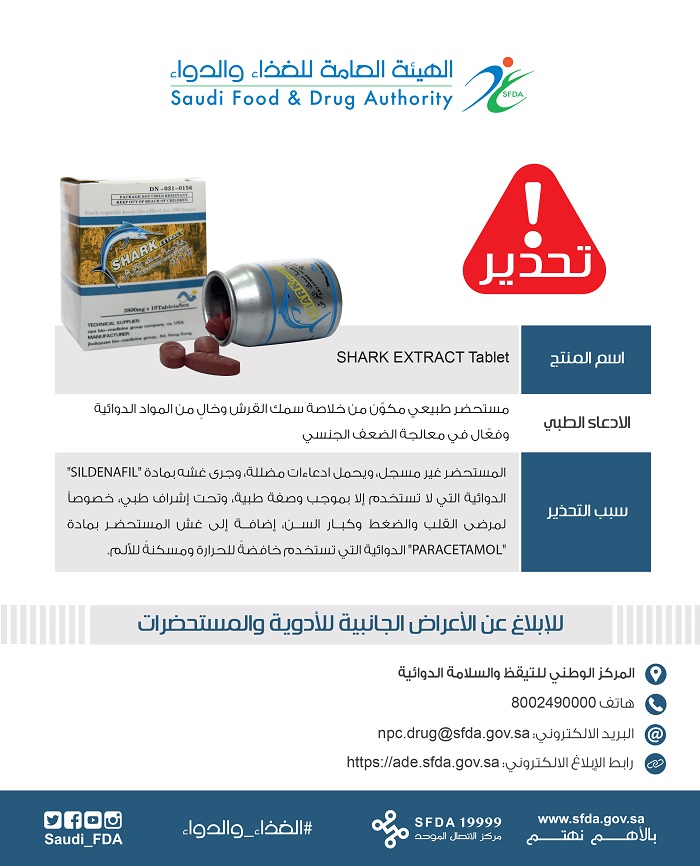
The U.S. Food and Drug Administration (FDA) is warning consumers not to purchase or consume Zimaxx, Libidus, Neophase, Nasutra, Vigor-25, Actra-Rx, or 4EVERON. These products are promoted and sold on web sites as "dietary supplements" for treating erectile dysfunction (ED) and enhancing sexual performance, but they are in fact illegal drugs that contain potentially harmful undeclared ingredients. These products have not been approved by FDA, and there is no guarantee of their safety and effectiveness, or of the purity of their ingredients.

  • To report sector-related issues

  • Call Centre 19999


Other Warnings

French health authorities ban cosmetics containing vitamin K1 (phytonadione)

The French Health Products Safety Agency (AFSSAPS) has announced a temporary ban on all cosmetic products containing vitamin K1 (INCI name: phytonadione; common name: phylloquinone; CAS: 84-80-0).

  • To report sector-related issues

  • Call Centre 19999


Other Warnings

Warning Date
    2007-03-26

Heparin Sodium Injection 10,000 units/mL, and HEP-LOCK U/P 10 units/mL Medication Errors

2007-03-26

Audience: Pharmacists, neonatology/pediatric healthcare professionals

  • To report sector-related issues

  • Call Centre 19999


Other Warnings

Warning Date
    2006-09-30

Highly Drug-resistant Tuberculosis, Worldwide Warning Given

2006-09-30

New forms of highly drug-resistant tuberculosis are emerging and action must be taken soon before they become widespread globally, says an editorial in this week's british medical journal. The authors say that urgent action is needed to implement effective tuberculosis control strategies, especially in countries where tuberculosis control practices have been inadequate.

  • To report sector-related issues

  • Call Centre 19999


Other Warnings

Warning Date
    2006-11-01

22 Hair Dye Chemicals Banned in Europe

2006-11-01

European regulators have banned 22 hair dye chemicals as part of a safety investigation prompted by a study linking dyes to bladder cancer.
But cosmetics industry officials tell WebMD consumers have little cause for concern, because the chemicals are virtually nonexistent in commercial hair products sold in Europe and the United States.
The ban, which takes effect Dec. 1, came as part of an overall safety review of hair dyes being conducted by the European Union's regulatory agency, the European Commission.

  • To report sector-related issues

  • Call Centre 19999


Other Warnings

Warning Date
    2006-11-22

Diabetes Risk Associated with Use of Olanzapine, Quetiapine, and Risperidone in Veterans Health Administration Patients with Schizophrenia

2006-11-22

To evaluate risk of new-onset type 2 diabetes associated with use of selected antipsychotic agents, the authors conducted a new-user cohort study in a national sample of US Veterans Health Administration patients with schizophrenia (and no preexisting diabetes). The authors studied 15,767 patients who initiated use of olanzapine, risperidone, quetiapine, or haloperidol in 1999–2001 after at least 3 months with no antipsychotic prescriptions. Patients were followed for just over 1 year. New-onset diabetes was identified through diagnostic codes and prescriptions for diabetes medication.

  • To report sector-related issues

  • Call Centre 19999


Other Warnings

Warning Date
    2006-12-02

NSAIDs in First trimester Linked to Congenital Anomalies in Babies

2006-12-02

The findings of a new case controlled study has been published in the August issue of the journal Birth Defects Research Part B, which is published by John Wiley & Sons, states that congenital birth defects especially cardiac septal defects, could be associated with the use of NSAID by women in their first trimester.

Women who took first-trimester NSAIDs also had more than three times the risk of anomalies related to cardiac septal closure, mainly ventricular and atrial septal defects, the investigators found.

  • To report sector-related issues

  • Call Centre 19999


Other Warnings

Warning Date
    2011-12-18

CDC Warns of Dangers of Giving Cough and Cold Medicines to Young Children

2011-12-18

A CDC survey found three infant deaths in 2005 associated with cough and cold medicines.
According to the report, in the latest MMWR, the infants ranged in age from 1 to 6 months, and all had high blood levels of what appeared to be pseudoephedrine. The survey was based on e-mail queries to medical examiners and a review of news and journal reports, and because the response was low, the CDC cautioned that the total might have underestimated the true number of cases.

  • To report sector-related issues

  • Call Centre 19999


Other Warnings

Warning Date
    2007-01-17

Drug Linked to Increase in Brain Hemorrhage Cases

2007-01-17

The rate of brain hemorrhages associated with blood thinning drugs quintupled during the 1990s, according to a study published in the January 9, 2007, issue of Neurology, the scientific journal of the American Academy of Neurology. In people over age 80, the rate increased more than tenfold.
Most of the increase is due to greater use of the drug warfarin, which is commonly prescribed to prevent blood clotting. Blood clots can lead to ischemic stroke, the most common type of stroke. An intracerebral brain hemorrhage is a stroke caused by bleeding in the brain.

  • To report sector-related issues

  • Call Centre 19999


Other Warnings

Warning Date
    2007-01-31

Sildenafil Decreases Ability to Smell

2007-01-31

Higher doses of sildenafil impair olfactory function, which is possibly linked to an impairment in nasal airflow that sildenafil can induce, German researchers report in the January issue of The Journal of Urology.

A team led by Dr. V. Gudziol at the University of Dresden Medical School studied 20 healthy, young male volunteers who received 50 mg, 100 mg and placebo in random order in a double-blind, crossover trial.

  • To report sector-related issues

  • Call Centre 19999


Other Warnings

Subscribe to Drugs